When the first-generation Toyota C-HR (2016-2019) arrived in December 2016, it did something few Toyotas had ever done—it genuinely shocked the automotive world. This wasn’t the sensible, conservative Toyota of old. This was a bold, radical design that rewrote expectations and sparked a global love affair .
🚐 Design That Stopped Traffic
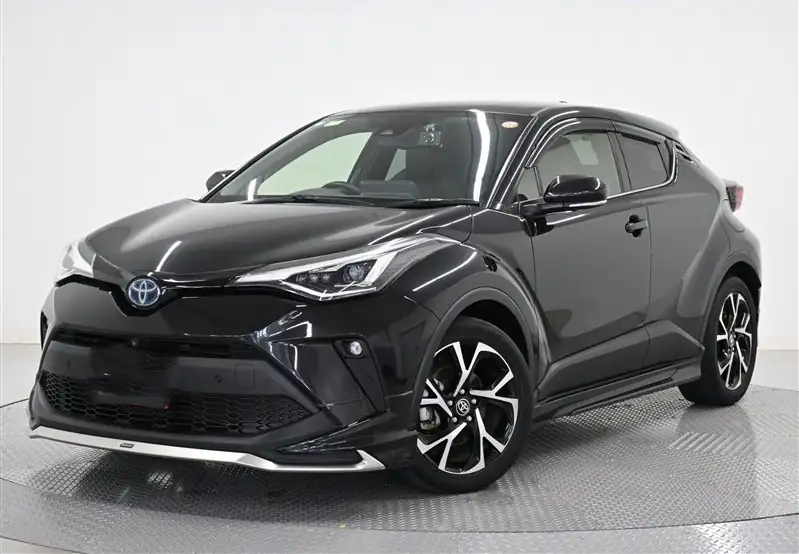
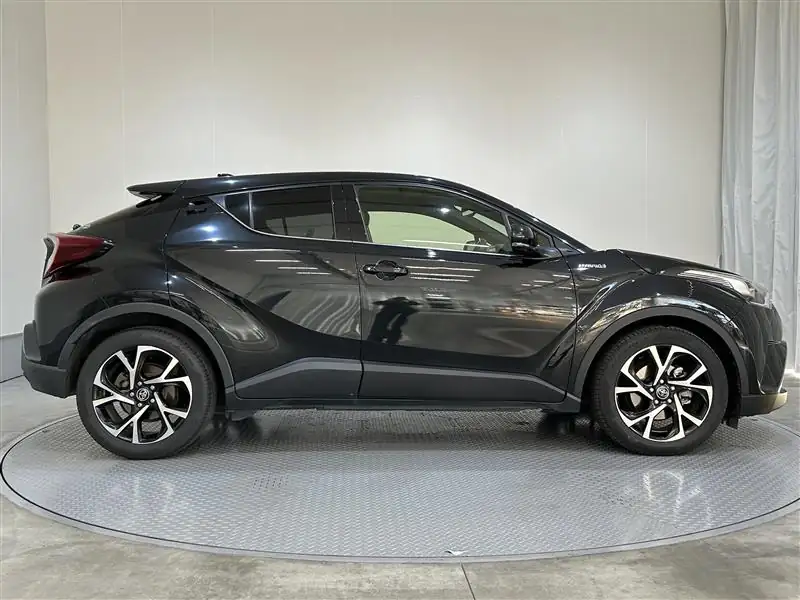
The C-HR (standing for “Coupe-High Rider”) was a dramatic departure from the brand’s traditionally forgettable styling . Its sharp, angular body, prominent wheel arches, hidden rear door handles, and floating roof created a coupe-like silhouette that looked like a concept car brought to life . More than half of all buyers cited the car’s styling as their principal reason for purchase—an extraordinary statistic that proves design was the primary driver of its success .
Substance Behind the Style
But the C-HR wasn’t just a pretty face. It was the first vehicle built on Toyota’s TNGA-C platform, achieving the lowest centre of gravity in its class for responsive, engaging handling . The sophisticated double-wishbone rear suspension—rare in this segment—gave it a composed ride that felt more like a sporty hatchback than a crossover.
The engine lineup was a masterclass in regional tailoring. For markets like Europe and Singapore, the focus was on a 1.8-litre hybrid, prized for its exceptional fuel efficiency. However, in Japan, Toyota offered a compelling alternative: a punchy 1.2-litre turbocharged petrol engine. This smaller unit, coded 8NR-FTS, delivered 116 PS and 185 Nm of torque. More importantly, it was the engine that unlocked the C-HR’s full potential, as it was the only powertrain available with 4WD—making it a uniquely capable choice for Japanese winters and those seeking extra traction . The availability of this specific, all-weather combination contributed significantly to its popularity in the domestic Japanese market.

A Conquest Machine
The numbers tell the story. **Over 2.1 million first-generation C-HR units were sold globally**, including 1.2 million in Europe. In Japan, it sold over 110,000 units in its first full year alone . Perhaps most impressively, at its peak in 2019, 67% of buyers were purchasing a Toyota for the first time—the C-HR was genuinely bringing new customers to the brand . Customer satisfaction reached 74%, well above the segment average of 64%.
The first-generation C-HR proved that Toyota could be daring, emotional, and exciting—and the world responded with open arms.

The Big Question: Why Did the C-HR Stop?
Why did production stop in May 2023? This confuses a lot of people.
The first-generation Toyota C-HR ended production in Japan in July 2023 for several key reasons
First, Toyota significantly expanded its SUV lineup starting in 2019. The arrival of the Raize (2019), Yaris Cross (2020), and Corolla Cross (2021) created intense internal competition. These newer SUVs directly cannibalized C-HR sales.
Second, the C-HR’s styling-focused design became its weakness . While its coupe-like profile initially wowed buyers, it compromised rear passenger space and cargo capacity. The Corolla Cross, built on the same TNGA-C platform, offered more interior room and a more practical design that appealed to a broader audience.
Third, declining sales sealed its fate. After peaking in 2017 as Japan’s best-selling SUV, monthly sales eventually dropped to around 2,000 units . Toyota prioritizes production line capacity for models that sell in higher volumes.
Why do smaller crossovers (Raize, Yaris Cross, Corolla Cross) continue production?
The answer lies in platform architecture and manufacturing cost.
| Model | Platform | Segment | Target Cost |
|---|---|---|---|
| C-HR | TNGA-C | Premium/upper-compact | Higher manufacturing cost |
| Corolla Cross | TNGA-C | Upper-compact | Lower cost than C-HR |
| Yaris Cross | DNGA | Compact (B-segment) | Lowest cost |
| Raize | DNGA | Compact (B-segment) | Lowest cost |
The C-HR and Corolla Cross share the TNGA-C platform, but Corolla Cross was developed with cost efficiency in mind from the start—it offers more interior space at a lower price point.
Crucially, the Yaris Cross and Raize use the DNGA platform (Daihatsu New Global Architecture), specifically designed for vehicles with 1,500cc or smaller engines. This platform is cheaper to produce and less “sophisticated” than TNGA.
So, Is C-HR Manufacturing Cost Higher?
Yes, and it’s a matter of business strategy.
The C-HR was designed as a style-driven, premium compact crossover. It featured:
- Sophisticated double-wishbone rear suspension (costlier than torsion beam)
- Low centre of gravity design requiring more engineering investment
- Higher-grade materials and build quality
Toyota’s own manufacturing data shows TNGA platform vehicles can achieve approximately 20% cost reduction compared to older platforms. However, despite the C-HR’s cost-efficient TNGA underpinnings, the real cost disadvantage was the C-HR’s positioning—it needed to be priced at ¥4.5–5 million to be profitable in Japan, whereas the Corolla Cross offers similar size at a lower price point.
In Europe, the second-generation C-HR sells for the equivalent of ¥7 million+, a price that would struggle in the Japanese market due to lower average incomes and Toyota’s concerns about resale scalping (similar to the Land Cruiser 300 issue) .
The Verdict
The C-HR wasn’t a bad car—2.1 million buyers worldwide proved otherwise. But Toyota made a strategic choice: the Japanese market would be better served by more practical, affordable crossovers. The Corolla Cross essentially replaced the C-HR in Toyota’s domestic lineup, offering better value to more customers.
The C-HR’s legacy lives on—it pioneered Toyota’s bold design direction and proved the company could create emotionally engaging vehicles. And for those who truly love the C-HR’s sharp styling and driving dynamics, there are still plenty of well-maintained first-generation examples to appreciate. 🚗
How Nexuss Cars Helps You
We know about Japanese motoring trends. That is why we do not just hand you the paper and say “good luck.”
At Nexuss Cars, we:
- Educate you about the current models and when to buy and what to buy in JDM.,
- Have our own team physically inspect the car to make sure that you are satisfied.
No tricks. No hidden problems. Just honest cars.
Ready to Find Your Car?
Tell us what you are looking for, and we will do the hard work for you:
What brand or body style are you dreaming of?
What grade do you want? (Grade 4 or higher is our usual recommendation)
How many kilometers are you okay with?
📩 Email us: [email protected]
🌐 Visit: NEXUSSCARS.COM – tell us your specs, and we’ll find, inspect, and ship your ideal units.